
The versatility of chicken is the secret to success – Presented by Henny Penny!
18/10/2022
The World Economic Forum estimates that roughly 50 billion chickens went to dinner in 2018 and didn’t come back.
We don’t know exactly how that translates into total servings, but we do know people in the U.S. ate nearly 4 billion fried chicken sandwiches in 2019. That was the year of the Chicken Sandwich Wars, in which some of the largest quick-service restaurant (QSR) brands took turns flaming each other on social media after people apparently went nuts over the new chicken fillet sandwich from Popeye’s, which they also ran out of after two weeks.
That says a lot about the growing popularity of chicken, and about the opportunities and challenges it presents for operators. Per capita consumption of chicken has been rising steadily for decades and recently passed pork to become the number one animal-based protein consumed worldwide, while both beef and pork have declined slightly. The same is true in the U.S., although the rate of increase has been much more dramatic over the past 10 years.
There are good reasons why chicken is so popular around the world.
- For hungry customers, chicken is an inexpensive, widely available source of protein
- It is generally perceived to be healthier than either beef or pork
- There are no religious or cultural proscriptions to speak of
- And in the dwindling number of places that large-scale poultry suppliers
and chain restaurants do not reach, chickens are happily and easily raised on small farms and in backyards
Most of these reasons are the same ones that make pork and beef popular, too. Perhaps a better question is, “Why has chicken been increasing in popularity compared to other meats?” The answer is variety. There are so many ways you can cook chicken. The partnering of global QSR brands with innovative foodservice equipment manufacturers has accelerated the systemization of machines and methods for the entire industry. That’s a fancy way of saying that today, anyone in the foodservice business can add chicken to their menu and make money doing it. Menu variety links consumers and outlets. It’s easy enough to see on the surface. Consumer preferences drive menu ideas and store concepts, while the ease with which chicken items can be added to the menu increases its popularity. That was the real lesson of the chicken sandwich wars: Social media aside, the demand for something new to try was neatly exposed. Just so many ways to cook chicken So how many ways are there to cook chicken? Someday we may actually figure that out. And by then, there will be more.
Let’s at least try to break it down.
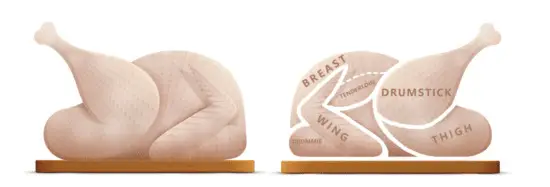
Start with the bird itself, since that illustrates the versatility of the supply chain and relates directly to the menu:
- Whole roasted, as in roto bird (also to cook/cut/serve)
- Eight-piece, bone-in, deep fried or baked
- Boneless breast for grilling
- Tenders/strips/fingers (from breast or tenderloin), deep-fried
- Wings, bone-in or “boneless” (breast cuts or small tenders,) deep fried or baked
- Nuggets (tenderloin + various)
- On its way to the menu, chicken can also start out fresh, frozen, frozen pre-breaded, fresh breaded, or shredded
Next, let’s look at popular cooking methods, since that relates directly to equipment investment and menu or concept differentiation:
- Pressure fried Mostly for fresh-breaded, eight-piece, bone-in but also boneless breasts, wings or tenders
- Open fried Depends on the fryer. Traditional open vats can handle fresh breaded bone-in and are used especially for extra-crispy texture. Lower capacity, oil-saving vats are the better choice for frozen and pre-breaded frozen products with less fall-off during cooking.
- Baked or roasted in a combi oven Cooking versatility and load capacity make combis excellent for traditional “homestyle” or rotisserie style whole birds. Some are also equipped with smoke boxes for genuine (not just sauced) smoked and barbecue halves, quarters and wings.
- Rotisserie Immensely popular
- Grilled on a char broiler, griddle or in combi oven Combi ovens provide operator control for high-temperature / low humidity grilling.
- Stir fried on stovetop, charbroiler or in combi oven More combi versatility
Versatility begets variation. It’s how we end up with signature items like barbecue chicken pizza, white chicken chile, chicken mac & cheese, or Cajun chicken & sausage gumbo.
Then there’s taste and style. This is where cooking methods meet flavor and texture enhancements such as breadings, seasonings and marinades to produce identifiable favorites and signature menu items:
- Breading textures: soft Southern fried, extra crispy, tempura battered
- Breading seasoning profile: mild to spicy hot
- Marinades for flavoring roast or grilled
- Herb-seasoned, charred, sauced, smoked
Finally, there are several ways any of these variations can appear on the menu:
- Entrée or meal
- As a sandwich on a bun or a wrap So many kinds, from pretzel buns to lettuce wraps
- As a single snack or multi-packs Think nuggets and buckets.
- Appetizers, sides, soups, salad toppers An efficient way for delis and “fresh” concepts to profit on leftovers from prepping whole birds on-site
There is good money in good chicken. Widespread popularity and profitability go hand in hand. Most of the reasons chicken is so popular among consumers are the same reasons that foodservice operators are able to make good money serving it. Variety results in fans loyal to certain tastes. Broader trends, like the popularity of chicken sandwiches as an alternative to burgers, or the growing preference for boneless products like tenders for finger food, offer fertile ground for building traffic.
Product cost:
Chicken is profitable because the product itself is low-cost (compared to beef and fish) and equipment and supply programs are highly systemized. The poultry supply chain is well organized. You can get just about any chicken product in any form delivered anywhere, any day of the week.
Operations:
Reputable equipment partners and distributors provide training, service, support and consumable supplies. Operating efficiency is mostly a matter of lining up the right parts in the right way. Cracker Barrel discovered this when Henny Penny helped them to launch a delicious fried chicken dinner by matching a high-volume pressure fryer that anyone can use with a humidified holding cabinet to maintain quality and manage throughput.
Holding:
Cooked chicken holds quite well under the right conditions. Holding is a key component to chicken profitability because it reduces throw-aways while offering the potential to cook in batches ahead of time and serve more customers during peak meal periods.
Margins:
Chicken lets you flex your core menu by adding premium-priced items with higher margins.
Life is better with the right partner The world is showing chicken a lot of love, these days. You don’t have to believe the statistics. Just look around at the menus and TV commercials. If you aren’t cooking chicken, you probably should be. If you do have chicken on the menu, it’s a good time to freshen up the choices and evaluate your system. Do you have the right equipment? Are you making enough money? Are you losing traffic to competitors? Are you getting the service and support you deserve? Are you by any chance looking for a partner that’s been helping the world’s largest chains to serve chicken for more than 60 years? Henny Penny and FoodServ Solutions is that partner. We are the chicken experts!!!
For more info email: nicole@foodserv.co.za

More articles
- 25/04/2025 THE TRUE COST OF FRYING OIL WASTE (AND HOW TO STOP IT) – HENNY PENNY
- 20/02/2025 UPGRADE YOUR KITCHEN WITH THE HENNY PENNY F5 OPEN FRYER
- 14/02/2025 BAKING RED VELVET BROWNIES WITH WHITE COCOLATE IN THE RATIONAL ICOMBI PRO
- 16/01/2025 SPICE UP YOUR MENU: PERFECT DEEP-FRIED CHICKEN WINGS WITH HENNY PENNY PFE500
- 20/11/2024 Tomahawk Steak with Chimichurri Marinade on the Synergy Chargo